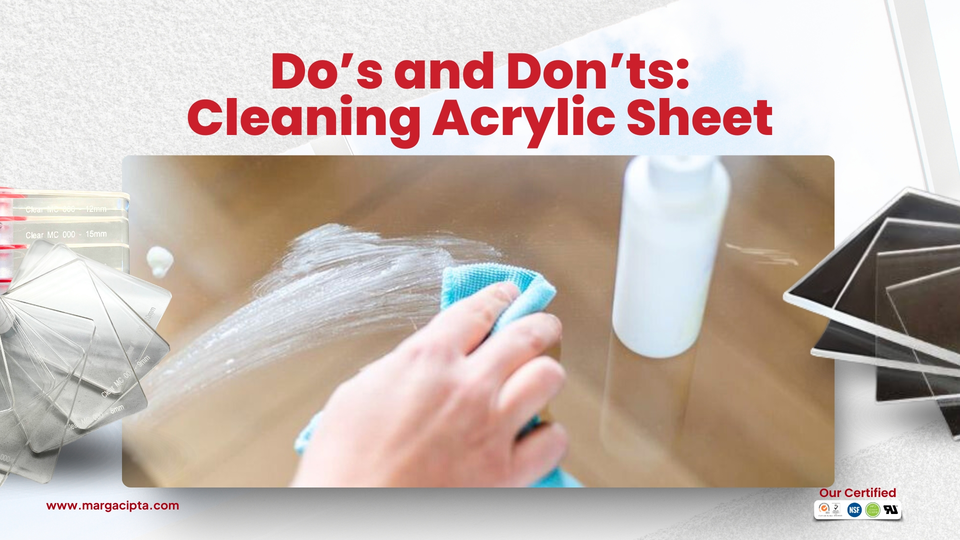
Do’s and Don’ts: Cleaning Acrylic Sheet the Right Way

Informational


Unlike glass, acrylic needs special care during cleaning to avoid scratches, clouding, or even cracks. If cleaned improperly, acrylic can lose its aesthetic appeal and optical clarity over time.

To ensure your acrylic sheet stays clean and clear, it's important to follow the right cleaning practices, and avoid the wrong ones.

In this article, find out about do’s and don’ts of cleaning acrylic sheet surfaces, so you can maintain their quality and extend their lifespan.

1. Do Use a Soft, Non-Abrasive Cloth

When cleaning an acrylic surface, always use a soft microfiber or 100% cotton cloth. These materials are gentle and help remove dust and fingerprints without scratching the surface.

Before applying any cleaning solution, it’s a good idea to lightly rinse or blow off loose dust particles to prevent them from causing fine scratches when wiped.

2. Don’t Use Rough Materials or Paper Towels

Many people mistakenly use paper towels, sponges, or regular cleaning rags on acrylic sheets. These materials may seem soft but can actually be abrasive enough to create tiny scratches.

Over time, these scratches accumulate and cause the acrylic to appear dull or hazy. Avoid using any rough fabric or material that could compromise the surface.

Read also: Why Cast Acrylic Is Better Than Glass: Benefits You Should Know

3. Do Use Acrylic-Safe Cleaners

If you’re using a cleaning solution, make sure it’s specifically formulated for acrylic or plastic surfaces. You can also use mild soap mixed with water for everyday cleaning.

Spray the solution onto the cloth rather than directly onto the sheet, then gently wipe in a circular motion to remove dirt and grime. Rinse with clean water afterward and dry with a fresh, soft cloth.

4. Don’t Use Ammonia or Alcohol-Based Products

One of the biggest mistakes in cleaning acrylic is using harsh chemical cleaners like glass cleaner, alcohol, or products containing ammonia.

These substances can cause the surface to crack, discolor, or become cloudy over time. Even though acrylic may look like glass, it’s chemically different and much more sensitive to solvents. Avoid any cleaner not labeled as safe for plastics or acrylic.

5. Do It Carefully with Clean Hands

Before you begin cleaning, make sure your hands are clean to avoid transferring oils and dirt onto the surface. Move your hands gently and avoid applying excessive pressure.

If you’re cleaning a larger sheet or panel, support it evenly to prevent bending or stress that might cause cracks.

Read also: Acrylic Sheet Thickness Guide: How to Choose the Right One

6. Don’t Use Dry Wiping Methods

Never clean an acrylic sheet while it's dry. Dry wiping can drag dust and dirt particles across the surface, increasing the risk of scratching.

Always ensure the surface is wet or at least slightly damp before wiping, as this creates a buffer between the cloth and the acrylic.

7. Do Regular Maintenance

Routine maintenance helps prevent the buildup of dust, oil, and grime that can be harder to remove later. Cleaning your acrylic sheets regularly using the right methods will keep them looking crystal clear and reduce the need for harsh scrubbing or polishing.

Consistency in care goes a long way in preserving the appearance of your acrylic installations.

Cleaning acrylic sheet the right way is essential if you want to maintain its beauty, durability, and clarity.

While acrylic is a strong and versatile material, it still needs gentle handling and the proper techniques to stay in top condition.

Avoid common cleaning mistakes, choose the right materials, and your acrylic sheet will remain as stunning as the day it was installed.

Need high-quality cast acrylic sheet for your next project?

Visit our Instagram for more details about our cast acrylic sheets, or download our Product Catalog here.
News Release

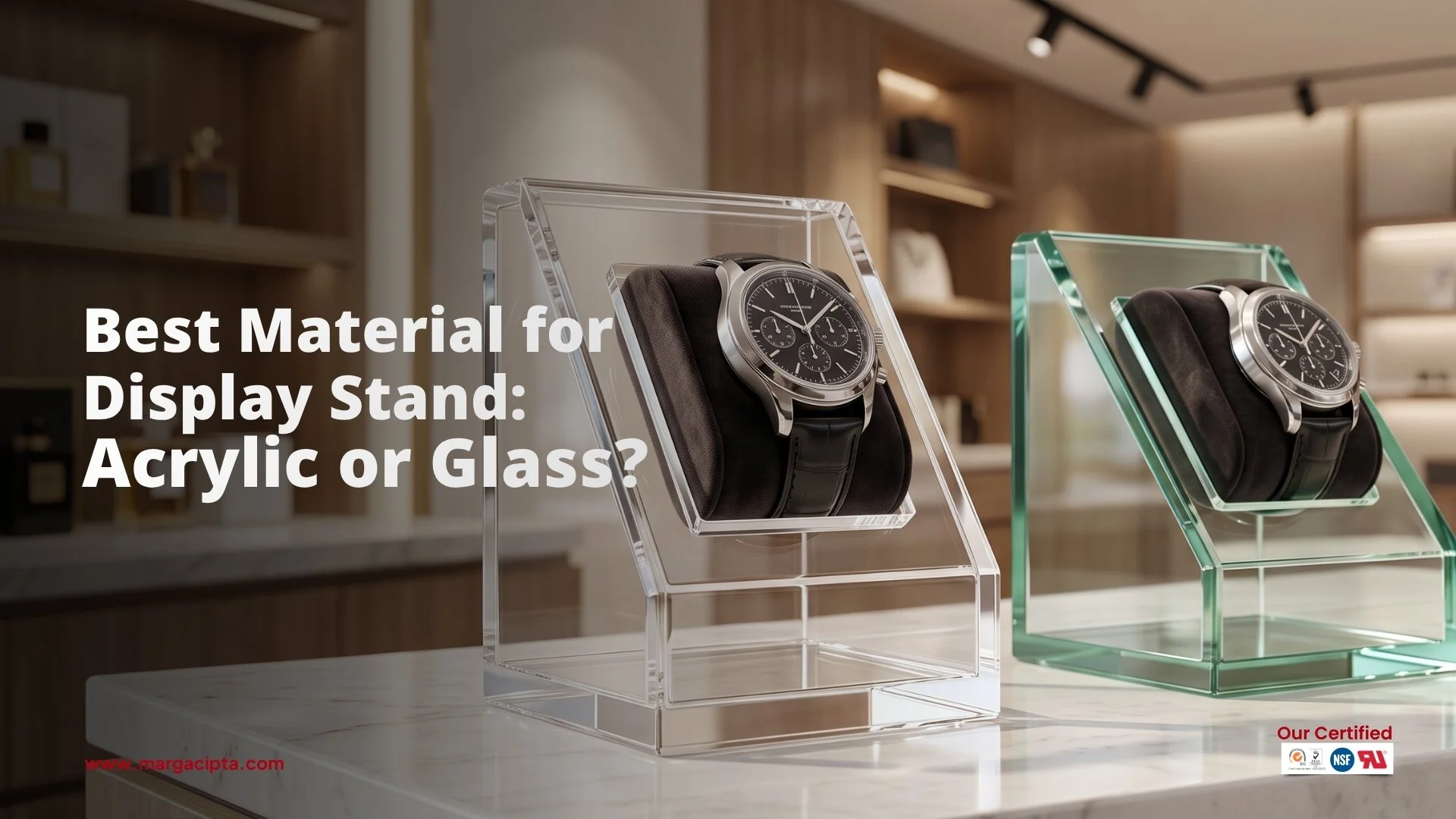
Best Material for Display Stand: Acrylic or Glass?

For most retail and commercial applications, acrylic is generally the best material for display stands. It provides excellent transparency, is significantly lighter than glass, offers better impact resistance, and is easier to fabricate into custom designs.

While glass remains a premium material for certain luxury applications, acrylic delivers a more practical balance of aesthetics, durability, and cost efficiency.

Acrylic vs Glass at a Glance

Here's a quick comparison between the two materials.

Feature Acrylic Glass
Transparancy Excellent Excellent
Weight Lightweight Heavy
Impact Resistance High Low
Fabrication Easy Limited
Customization Excellent Moderate
Cost Efficiency High Moderate

For most display stand projects, acrylic provides greater flexibility without sacrificing appearance.

Read also: Acrylic Sheet for Retail Displays: Benefits, Applications, and Design Ideas

Clarity and Appearance

Both acrylic and glass offer a clean, transparent look that showcases products effectively.

However, high-quality acrylic sheets provide excellent optical clarity while offering more design flexibility through various finishes, including:

  • Clear
  • Frosted
  • Satin
  • Colored
  • Mirrored

These options allow businesses to create customized displays that match their branding.

Durability

Display stands are frequently moved, cleaned, and handled.

Acrylic performs well because it is more impact-resistant than glass. If accidentally dropped or bumped, acrylic is less likely to shatter.

Glass, while visually elegant, is more fragile and requires careful handling during transportation and installation.

Weight and Installation

Acrylic is considerably lighter than glass, making it easier to:

  • Transport
  • Install
  • Rearrange
  • Store

This advantage is especially valuable for exhibition displays, retail promotions, and modular merchandising systems.

Fabrication Flexibility

One of acrylic's biggest advantages is its compatibility with modern fabrication methods.

Acrylic sheets can be:

  • Laser cut
  • CNC machined
  • Thermoformed
  • Engraved
  • UV printed

This allows designers to produce highly customized display stands with clean edges and intricate details.

Glass generally requires more specialized processing and offers fewer customization options.

Cost Considerations

Acrylic is often the more cost-effective solution.

Lower transportation costs, easier fabrication, and reduced breakage risks contribute to better overall project value.

For businesses producing multiple display stands, acrylic offers significant long-term savings.

When Glass May Be Suitable

Although acrylic is preferred for most applications, glass may still be suitable for:

  • Luxury furniture
  • Permanent architectural installations
  • High-end decorative displays

However, these projects often involve higher installation costs and stricter handling requirements.

Read also: How to Bend Acrylic Sheet: Methods, Tools, and Best Practices

Why Material Quality Matters

Regardless of the material chosen, quality has a direct impact on the final result.

Premium acrylic sheets provide:

  • Better clarity
  • Consistent thickness
  • Cleaner fabrication
  • Improved durability
  • Long-lasting appearance

Marga Cipta supplies high-quality acrylic sheets suitable for display stands, retail displays, product showcases, and commercial fabrication projects.

Conclusion

When comparing the best material for display stand—acrylic or glass—acrylic is the preferred choice for most retail, commercial, and promotional applications.

Its combination of clarity, lightweight construction, durability, and fabrication flexibility makes it a reliable solution for modern display systems.

Build Better Display Stands with Marga Cipta

Looking for premium acrylic sheets for your next display project? Marga Cipta offers high-quality acrylic sheets in various sizes, thicknesses, and finishes to meet your fabrication needs.

For inquiries or orders, email info@margacipta.com.

For product updates, inspiration, and application ideas, follow Instagram @margacipta.

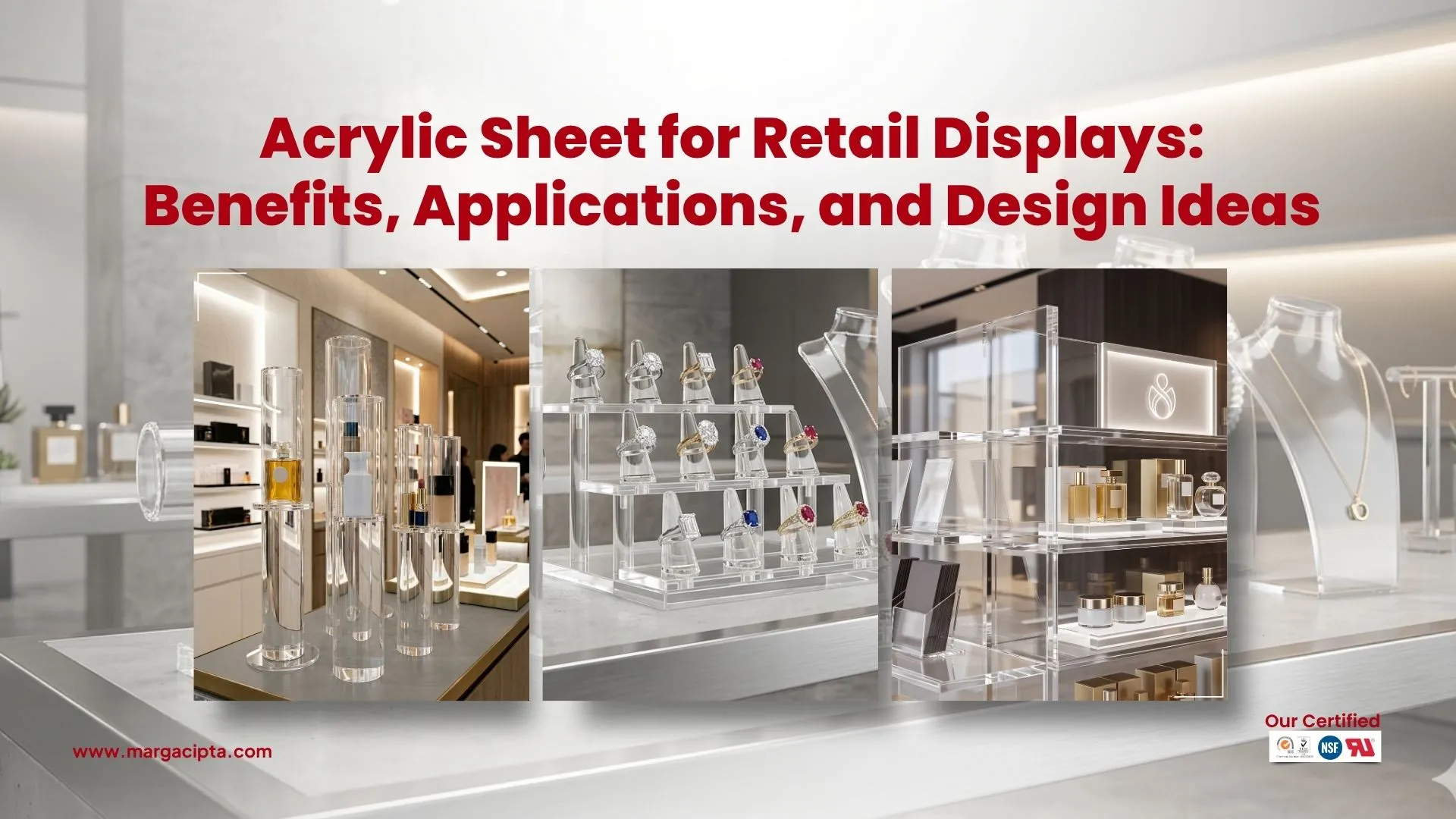
Acrylic Sheet for Retail Displays: Benefits, Applications, and Design Ideas

Acrylic sheet is one of the best materials for retail displays because it combines excellent clarity, durability, lightweight performance, and design flexibility. From product stands and display cases to shelf dividers and promotional signage, acrylic helps retailers create attractive displays that enhance the customer experience.

Whether you're designing a boutique, supermarket, showroom, or exhibition booth, acrylic sheets offer a professional solution for showcasing products effectively.

Why Acrylic Is Popular for Retail Displays

Retail displays need to be visually appealing while remaining durable enough for daily use. Acrylic meets both requirements by offering a clean, modern appearance and reliable performance.

Compared to traditional materials, acrylic provides several advantages:

  • Crystal-clear transparency
  • Lightweight construction
  • Good impact resistance
  • Easy fabrication
  • Wide variety of finishes and colors

These features make acrylic suitable for both permanent and seasonal retail displays.

Read also: Food Grade Acrylic: Safe Choice for Your F&B Business

Key Benefits of Acrylic Sheet for Retail Displays

1. Excellent Product Visibility

Clear acrylic allows customers to focus on the displayed products rather than the display structure itself.

Its glass-like transparency enhances product presentation without obstructing visibility.

2. Lightweight Yet Durable

Retail displays are often moved or rearranged. Acrylic's lightweight nature makes transportation and installation easier while maintaining good structural strength.

3. Easy to Fabricate

Acrylic sheets can be:

  • Laser cut
  • CNC machined
  • Engraved
  • UV printed
  • Thermoformed

This flexibility allows retailers to create customized display solutions for different products.

4. Professional Appearance

Available in clear, colored, frosted, satin, and mirrored finishes, acrylic complements various retail concepts, from luxury boutiques to modern convenience stores.

Common Applications

Acrylic sheets are used in numerous retail display applications.

Popular examples include:

1. Product Display Stands

Ideal for cosmetics, electronics, jewelry, accessories, and packaged goods.

2. Display Boxes and Cases

Transparent acrylic protects products while allowing customers to view them clearly.

3. Shelf Dividers

Acrylic helps organize merchandise neatly while maintaining a clean visual appearance.

4. Promotional Sign Holders

Retailers frequently use acrylic holders for pricing information, promotional materials, and advertisements.

5. Point-of-Purchase Displays

Custom acrylic displays attract attention and encourage impulse purchases.


Design Ideas for Acrylic Retail Displays

Acrylic offers endless design possibilities.

Some popular concepts include:

  • Minimalist transparent display stands
  • Layered acrylic shelving
  • Illuminated acrylic displays
  • Colored acrylic branding elements
  • Floating product displays
  • Modular display systems

These designs help create a premium shopping environment while maximizing product visibility.

Choosing the Right Acrylic Sheet

When selecting acrylic sheets for retail displays, consider:

  • Required thickness
  • Display size
  • Product weight
  • Surface finish
  • Indoor or outdoor use

Using the appropriate specification ensures both durability and aesthetic appeal.

Read also: Acrylic Application for Accessories: Stylish, Durable, and Versatile

Why High-Quality Acrylic Matters

Retail displays represent your brand image.

High-quality acrylic sheets provide:

  • Superior clarity
  • Consistent thickness
  • Better edge finishing
  • Improved durability
  • Reliable fabrication performance

Marga Cipta supplies premium acrylic sheets suitable for retail displays, visual merchandising, signage, and custom fabrication projects.


Conclusion

Acrylic sheet for retail displays offers an ideal combination of clarity, durability, and design flexibility. Its versatility makes it suitable for a wide range of commercial environments, helping businesses present products professionally while enhancing the customer experience.

Choosing high-quality acrylic sheets ensures long-lasting retail displays that remain attractive and functional over time.

Looking for Premium Acrylic Sheets?

Marga Cipta offers high-quality acrylic sheets in various thicknesses, colors, and finishes for retail displays, signage, and custom fabrication.

For inquiries or orders, email info@margacipta.com.

For product information, inspiration, and the latest updates, follow Instagram @margacipta.

How to Bend Acrylic Sheet: Methods, Tools, and Best Practices

Acrylic sheets can be bent by applying controlled heat until the material becomes flexible enough to shape.

This process is widely used in signage, displays, retail fixtures, and custom fabrication projects.

When performed correctly, bending acrylic allows manufacturers and fabricators to create clean, durable, and professional-looking products without compromising the material's appearance.

Why Acrylic Can Be Bent

Acrylic is a thermoplastic material, meaning it softens when heated and hardens again as it cools.

This property makes acrylic ideal for creating:

  • Display stands
  • Sign holders
  • Product showcases
  • Protective covers
  • Custom fabricated components

Proper heating techniques are essential to achieve smooth bends without damaging the material.

Read also: Acrylic vs Glass for Plaque: Which Material is Better?

Common Methods for Bending Acrylic

Several methods are used depending on the project requirements and equipment available.

1. Strip Heater Bending

A strip heater is one of the most common tools used for acrylic fabrication.

The heater applies concentrated heat along a specific line, allowing the sheet to bend precisely where needed.

Benefits include:

  • Clean bending lines
  • Good accuracy
  • Suitable for production environments

2. Heat Gun Bending

A heat gun can also be used for smaller projects or custom work.

Advantages include:

  • Portable equipment
  • Lower cost
  • Flexible application

However, heat distribution may be less consistent compared to a strip heater.

3. Oven Heating

For complex shapes or larger bends, acrylic sheets can be heated in a temperature-controlled oven.

This method allows:

  • Uniform heating
  • Greater forming flexibility
  • More advanced shaping possibilities

It is commonly used in industrial and large-scale fabrication.

Tools Needed for Acrylic Bending

Depending on the method, common tools include:

  • Strip heater
  • Heat gun
  • Industrial oven
  • Clamps
  • Straight edge guides
  • Protective gloves

Using proper equipment improves accuracy and reduces the risk of damage.

Best Practices for Bending Acrylic

Apply Heat Evenly

Uneven heating can lead to stress marks, bubbles, or cracks.

Avoid Overheating

Excessive heat may cause discoloration or surface distortion.

Use Proper Support

Supporting the acrylic during bending helps maintain accurate angles and prevents unwanted deformation.

Allow Sufficient Cooling Time

Acrylic should be allowed to cool completely before handling to maintain its new shape.

Common Mistakes to Avoid

Many fabrication issues result from avoidable mistakes.

These include:

  • Heating too quickly
  • Applying uneven heat
  • Bending cold acrylic
  • Using low-quality materials
  • Removing support too early

Following proper fabrication techniques helps ensure professional results.

Read also: Why Cast Acrylic Is Better Than Glass: Benefits You Should Know

Why Material Quality Matters

High-quality acrylic sheets typically provide:

  • More consistent heating performance
  • Cleaner bending results
  • Reduced risk of cracking
  • Better overall appearance

Material consistency is especially important for projects requiring precise fabrication.

Marga Cipta supplies premium acrylic sheets suitable for cutting, engraving, thermoforming, and bending applications.

Conclusion

Understanding how to bend acrylic sheet properly is essential for achieving clean and professional fabrication results.

By using the right heating methods, tools, and best practices, fabricators can create durable and visually appealing acrylic products for a wide range of applications.

Looking for High-Quality Acrylic Sheets?

Marga Cipta provides premium acrylic sheets designed for fabrication, display, signage, and custom projects.

For inquiries or orders, email info@margacipta.com.

For product information, project inspiration, and the latest updates, follow Instagram @margacipta.

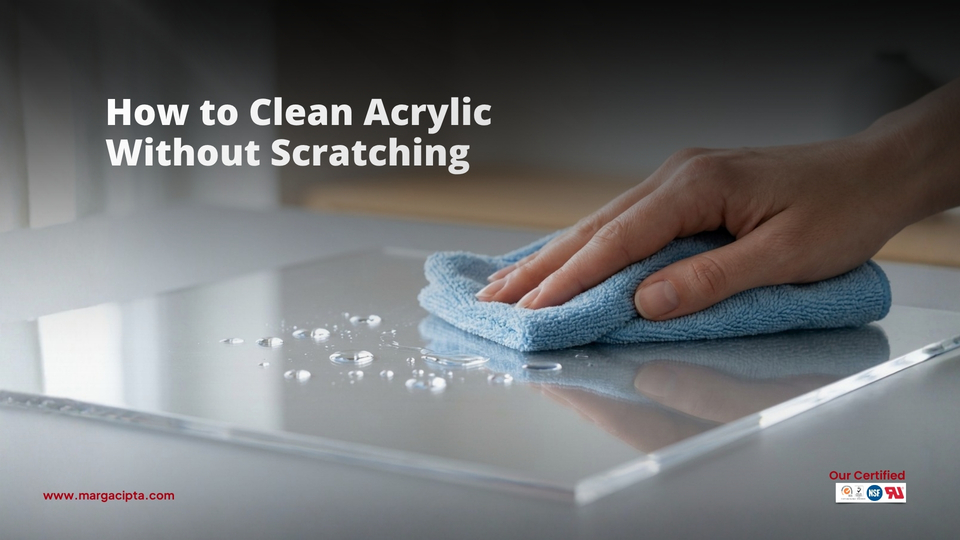
How to Clean Acrylic Without Scratching

Acrylic is a popular material used in signage, displays, furniture, and protective panels due to its clarity and lightweight properties. However, cleaning acrylic requires special care. If done incorrectly, it can easily get scratched, reducing its visual quality.

In this guide, we will show you how to clean acrylic without scratching so you can maintain its clarity and extend its lifespan.

1. Remove Dust Before Cleaning

Before applying any liquid cleaner, always remove dust and loose particles from the surface. Dust can act like abrasive material and cause scratches when wiped.

Use a soft microfiber cloth or a gentle air blower to remove debris. Avoid using rough fabrics or paper towels, as they can damage the surface.

Read also: Benefits of Using Clear Cast Acrylic Sheet

2. Use the Right Cleaning Solution

Choosing the correct cleaning solution is crucial. Avoid using glass cleaners that contain ammonia or alcohol, as these chemicals can damage acrylic and cause it to become cloudy.

Instead, use a mild soap mixed with water or a specialized acrylic cleaner. This ensures that the surface remains clear and undamaged.

3. Clean with a Soft Cloth

Always use a clean, soft microfiber cloth when wiping acrylic. Gently wipe the surface without applying too much pressure.

Use a dabbing or light wiping motion rather than scrubbing. Scrubbing can create fine scratches that are difficult to remove.

4. Avoid Circular Motions

While it may feel natural to wipe in circles, this method can create visible swirl marks on acrylic surfaces.

Instead, clean in straight lines, preferably in one direction. This helps maintain a smooth and uniform finish.

5. Dry Properly

After cleaning, dry the acrylic with a separate dry microfiber cloth. This prevents water spots and streaks from forming.

Make sure the cloth is clean and free from dirt to avoid reintroducing particles onto the surface.

6. Handle with Care

Prevention is just as important as cleaning. Avoid placing sharp or rough objects directly on acrylic surfaces.

If the acrylic is used in high-contact areas, consider adding a protective coating or cover to reduce the risk of scratches.

Read also: Does Acrylic Shatter? Find Out Its Strength and Durability

7. What to Avoid

To keep acrylic in the best condition, avoid the following:

  • Paper towels or rough cloths
  • Ammonia-based cleaners
  • Alcohol or solvent-based products
  • Excessive pressure while cleaning

Conclusion

Knowing how to clean acrylic without scratching is essential to maintaining its clarity and appearance. By using the right tools and techniques, you can keep your acrylic surfaces looking new for a long time.

Simple habits such as using microfiber cloths, avoiding harsh chemicals, and cleaning gently can make a significant difference in preserving the quality of acrylic.

Ready to explore your clear cast acrylic options? At Margacipta Wirasentosa, we offer high-quality clear cast acrylic sheets from 100% virgin MMA in various thicknesses and custom sizes to fit your needs.

Reach to our Instagram or download our Product Catalog for more information.